“Remember when we saved that village?”
A story-driven adventure game for kids — created together, remembered forever.
Built for imagination, not addiction.
Designed for connection, not consumption.
Coming soon to

A story-driven adventure game for kids — created together, remembered forever.
Built for imagination, not addiction.
Designed for connection, not consumption.
Coming soon to
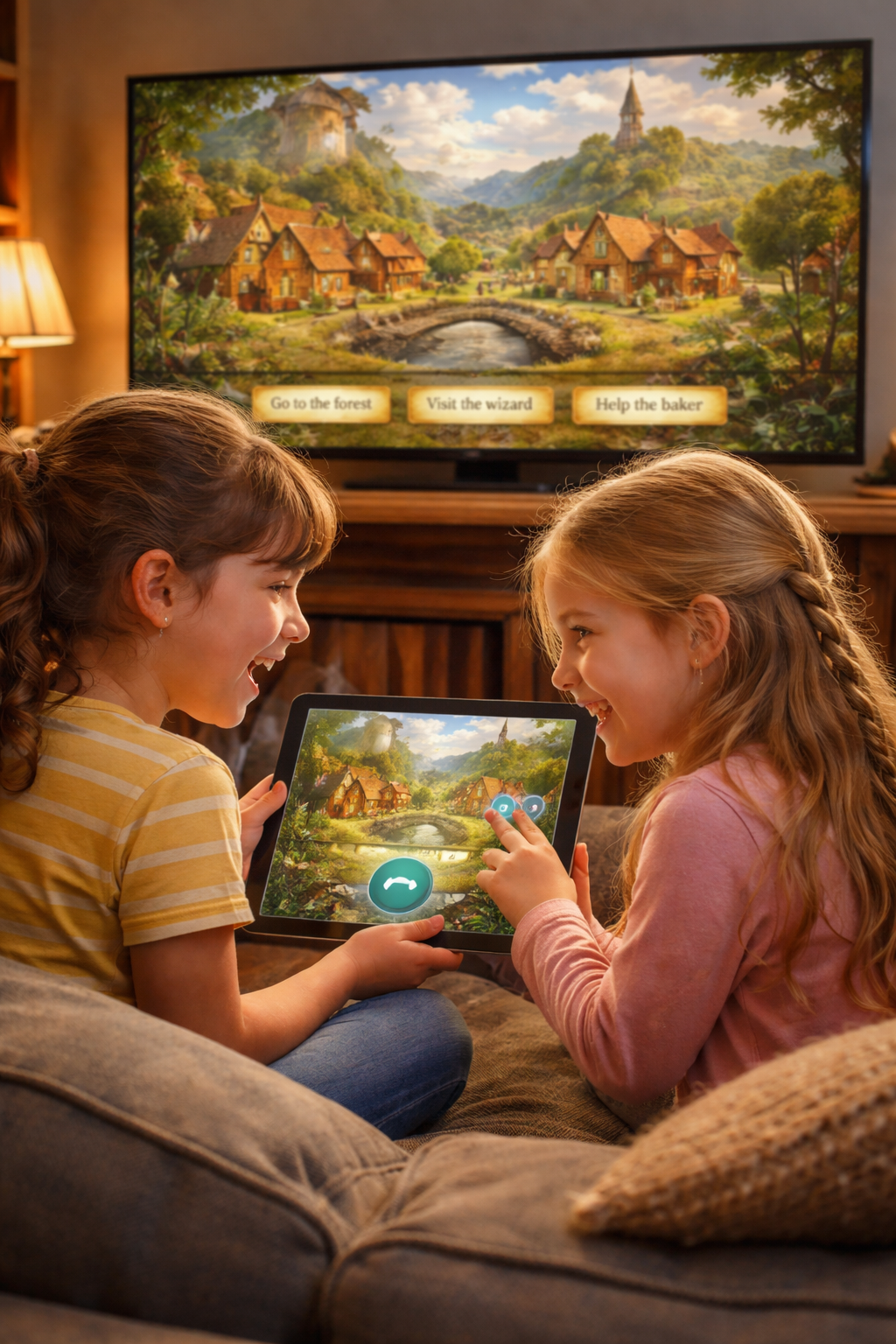
Two kids on the couch. A tablet in their hands. A fantasy world on the family TV that knows their names, remembers their choices, and grows because of who they are.
No accounts to create. No strangers online. No in-app purchases. They just sit down and the story begins.
Ads, loot boxes, dopamine loops, dark patterns. Roblox, Fortnite, and the app store’s endless scroll of attention-harvesting games. Parents hate them. Kids are hooked on them.
Math worksheets wearing a game costume. Progress bars, quiz scores, and forced “learning moments.” Kids smell it instantly and disengage. Parents tolerate them. Nobody loves them.
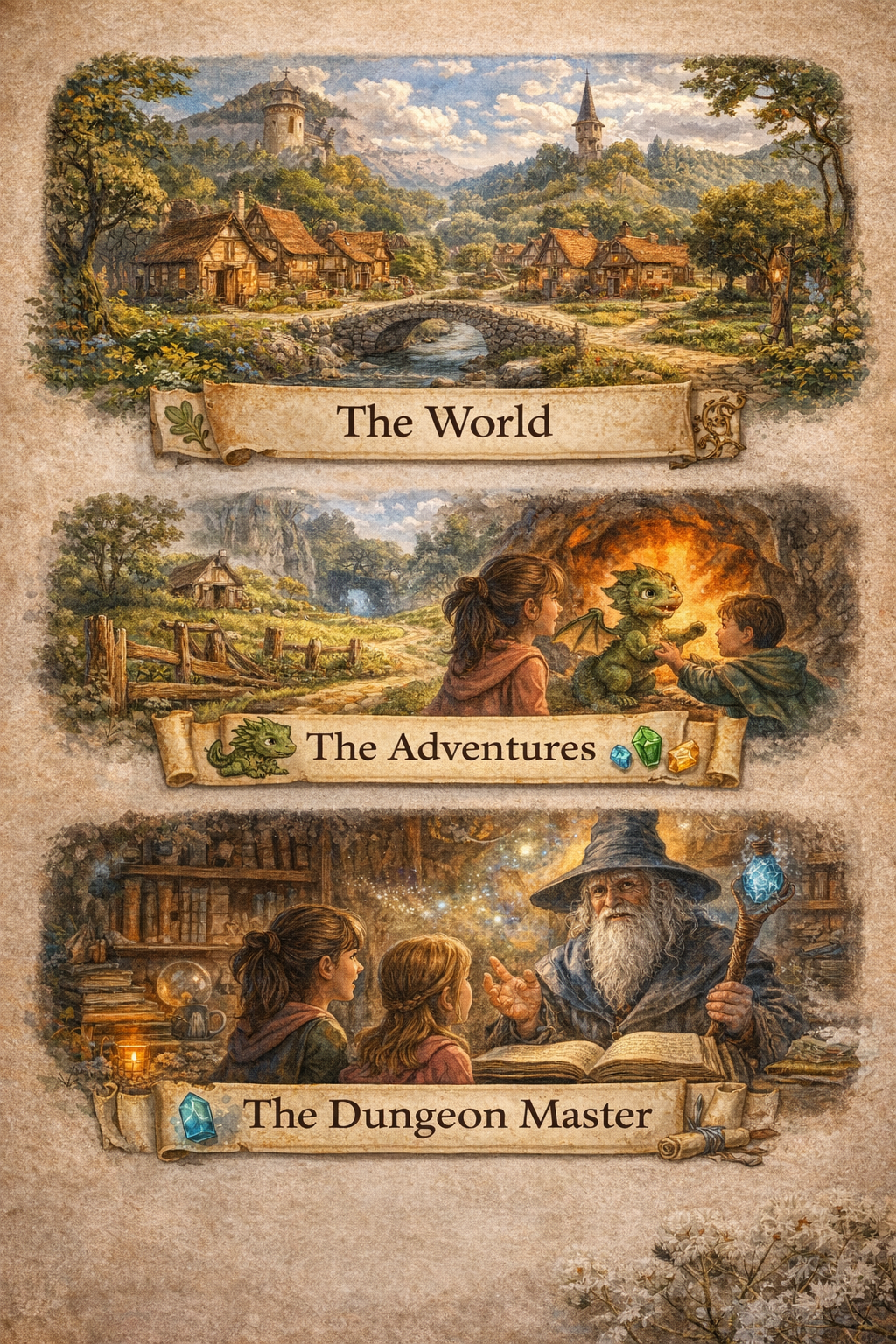
A warm fantasy village — where everyone knows your kids. The baker remembers they helped her. The bridge they fixed is still standing.
Short quests, 10–15 minutes each. A baby dragon is lost. A farmer’s fence is broken. 3–4 decision points, multiple paths. No wrong answers — just different consequences.
An AI referee that narrates, listens, and responds — but never dominates. A game engine decides outcomes. A memory layer tracks history. The AI narrates what the system produces.
One tablet, mirrored to the family TV. Kids tap illustrated choice cards or speak naturally. Storybook watercolor and ink. The story stays primary.
Two kids, same couch, same world. They negotiate, argue, compromise, lead. Cooperation emerges from the story — it’s never forced.
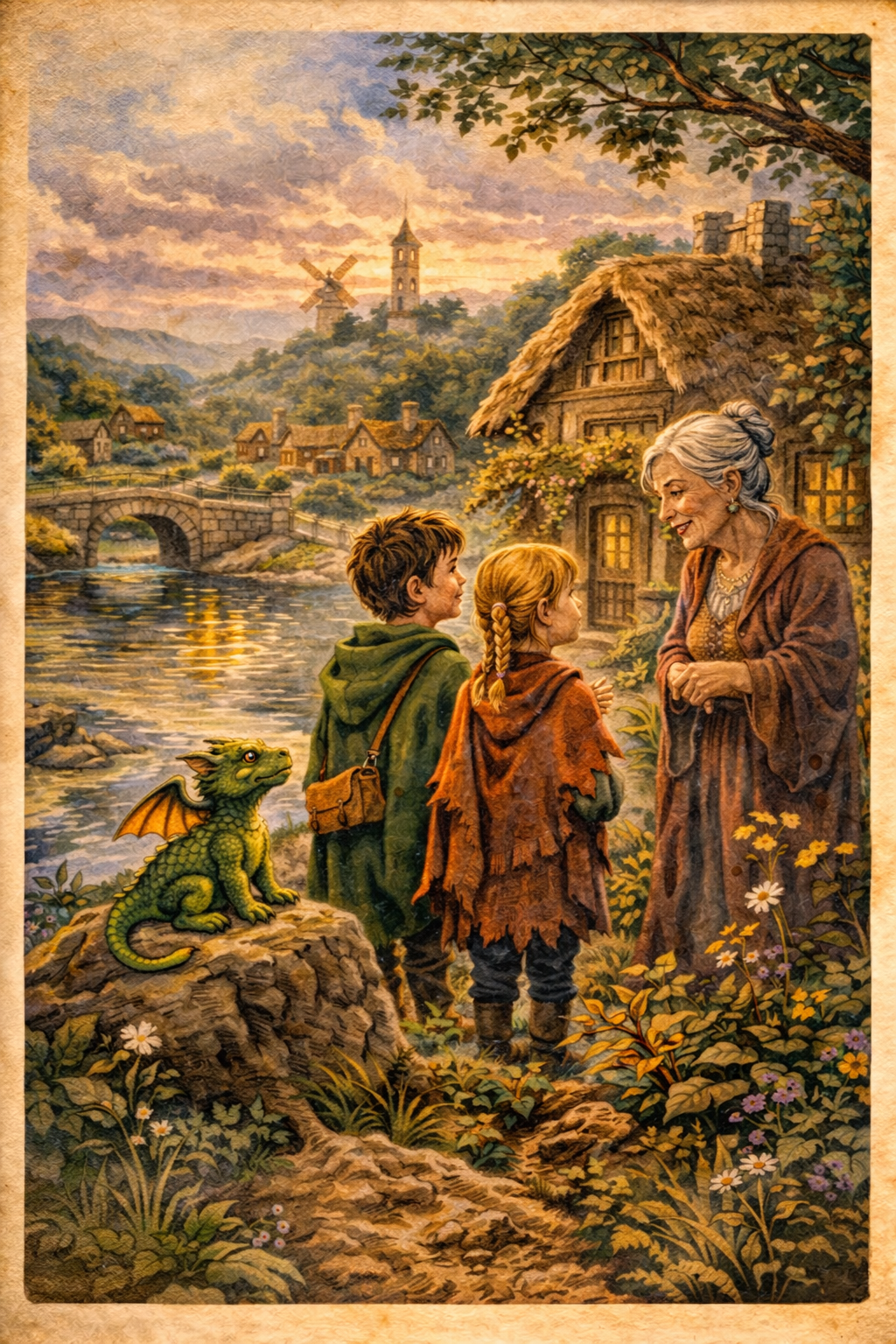
A world where your kids’ choices shape who they become. Every decision carries weight, every action has consequence, and the story responds in kind.
They don’t just play — they choose, they reflect, and they grow.
It’s not about winning. It’s about becoming someone worth remembering.
The village remembers across sessions. Characters evolve. Consequences compound. The baker remembers. The bridge still stands.
Two kids, same screen, same room. They negotiate and lead. The AI mediates. No separate screens, no online strangers.
No currency. No shop. Help the carpenter find his daughter’s fairy — he builds your treehouse. The only economy is kindness.
Any player can switch roles and become the Game Master. The AI flips from narrator to support. A child running a story for her sister isn’t consuming — she’s creating.
Physical playing cards mailed as trophies. Hardbound adventure books. Scan Legos, drawings, and stuffed animals into the game.
No public lobbies. No strangers. No social feed. Visit a cousin’s village because she invited you. Private by default.
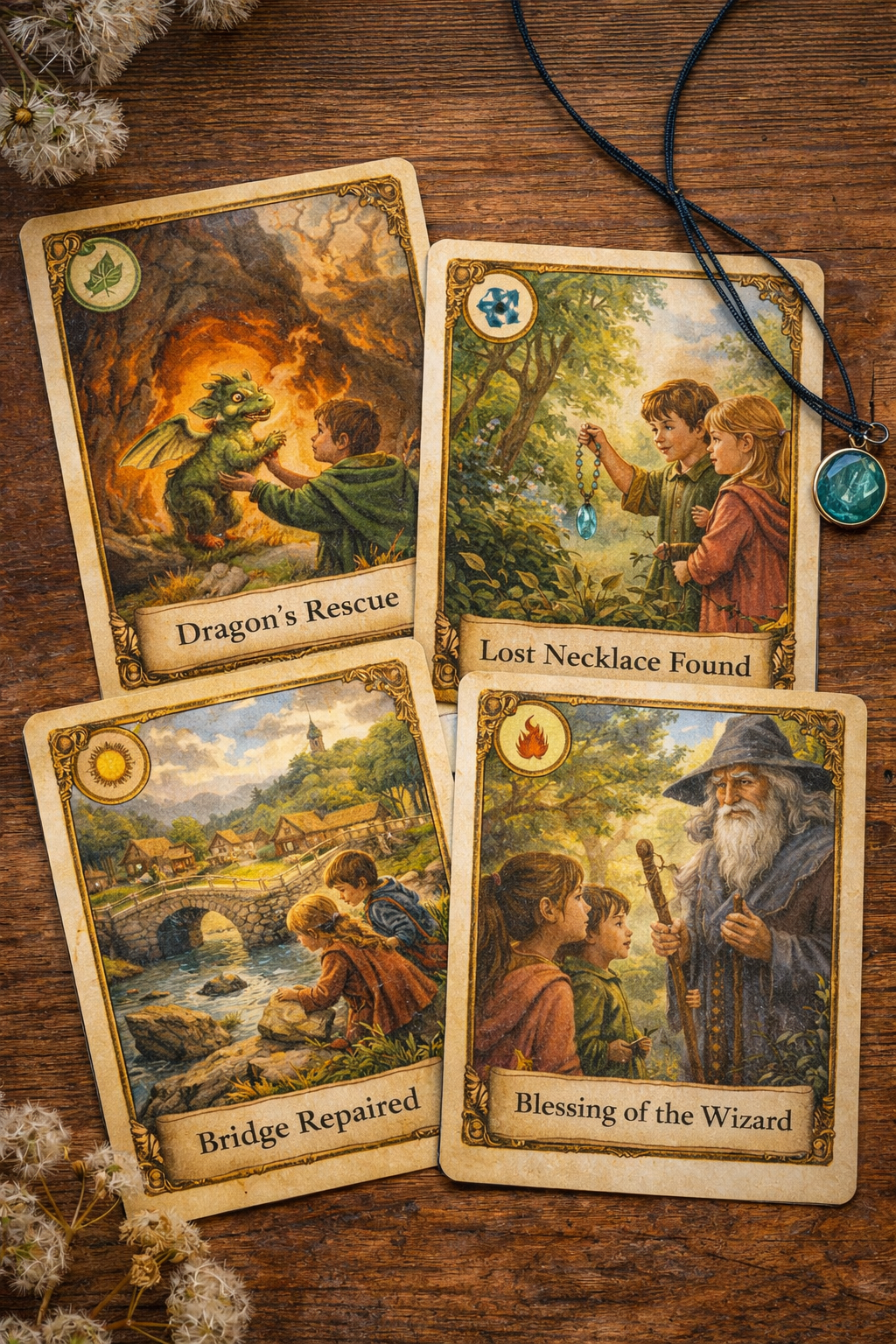
Kids who complete quests earn beautifully illustrated playing cards — hand-drawn artifacts of what they did, not what they bought.
As part of the subscription, we print and mail the finest of these as real, physical objects: thick cardstock, museum-quality illustration, something a kid pins to her wall.
A portion of every shipment goes to a children’s charity.
And when a chapter of their story feels complete, families can order a hardbound book of their adventures — personalized, illustrated, museum-quality. Their story, on their shelf.
“Remember when we saved that village?”
If a kid says this to her sister — we have a product.
“Can I buy more gems?”
If she says this — we failed.
We’re building something new — a living storybook closer to bedtime reading than a video game. Join the waitlist to get early access when the beta opens.
No spam. No sharing. Just an invitation when we’re ready.
Welcome to the village. We’ll be in touch.
This product is being developed with child safety, minimal data collection, and parental control as core requirements. It is intended to operate as a private, invitation-based experience with no open chat or interaction with unknown users. Any use of voice input, game state memory (such as world changes and story progress), or personalization will be implemented in alignment with applicable children’s privacy regulations, including COPPA, prior to launch. Data collection will be limited to what is necessary for core functionality, and parents will have control over account creation, consent, and data management.